Obama on his own Middle East record: Zero Percent Success by Prof. Barry Rubin in PJ Media Oct 10, 2012
.... The (Obama Administration's) "peace process" policy has failed. And this administration has done more to undermine Israel’s security than all the previous presidencies put together. The problems include: pushing Israel to ease the pressure on Hamas in the Gaza Strip; helping a genocide-oriented anti-Israel government into power in Egypt; same thing in Syria; making America’s leading ally in the region a Turkish regime that was viciously anti-Israel; and more. Read more.
Romney's vs. Obama's attitudes on Israel by Daniel Pipes in Israel Hayom Sept 4, 2012
"President [Barack] Obama has thrown allies like Israel under the bus," Mitt Romney, the Republican candidate for president, said in his high-profile speech accepting his party's nomination last week, repeating a slang phrase for sacrificing a friend for selfish reasons that he has used before, notably in May 2011 and January this year.
This criticism of Obama fits a persistent Republican critique. Several other recent presidential candidates have also used or endorsed the same "bus" formulation to describe Obama’s attitude to Israel: Herman Cain in May 2011, Rick Perry in September 2011, Newt Gingrich in January 2012, and Rick Santorum in February 2012.
These Republican attacks on Obama's relations with Israel have several important implications for U.S. foreign policy. First, out of the many Middle East-related issues, Israel, and Israel alone, retains a permanent role in U.S. electoral politics, influencing how a significant numbers of voters — not just Jews but also Arabs, Muslims, Evangelical Christians, conservatives and liberals — vote for president.
Read more
DemoCast.TV shows commentary on the course of the Obama Administration's Middle East policies and its impact on the America-Israel relationship.
US Jewry’s cherished values by CAROLINE B. GLICK in The Jerusalem Post 10/11/2012
For 70% of American Jews, party loyalty trumps all of their conceivable rational interests.
Obama’s gutting of Medicare to pay for Obamacare has harmed the medical choices for older Jewish Americans.
His war on tax deductions for charitable contributions has placed synagogues, Jewish schools and nursing homes in financial jeopardy.
So with economics ruled out as a reason to support Obama we are left with American-Jewish values.
But is Obama really advancing those values? What are those values anyway? Read more
Video chronicle of commentary on US-Israel relations during the Obama Administration from JooTube.TV:
Ms. Glick concludes: "The most disturbing aspect of the surveys of American Jewish voters is not that they are willing to vote for the most hostile US president Israel has ever experienced in order to remain true to their party. The most disturbing aspect of the American Jewish community’s devotion to Obama and the Democrats is that it indicates that the vast majority of American Jews have abandoned their faculties for independent thought and judgment in favor of conformism and slavish partisanship. They have rendered themselves unreachable."
Showing posts with label president. Show all posts
20121002
How Obama's soft-on-Islamism policies undermine liberty in Middle-East & America- Prof Barry Rubin
Prof. Barry Rubin, known for his Middle East strategies work at the GLORIA Center at the IDC in Herzliya, Israel, is also Middle East Editor for PJ Media.
What to Say When You’re Handed the Obama-Is-Good-for-Israel Talking Points
[Jews for Obama boast that] "Obama just gave Israeli President Shimon Peres a presidential medal
of freedom." Well, he also has just helped give Israel a second Muslim Brotherhood-dominated regime next door and insists that this is a good thing.
Question: [Jews for Obama claim that] U.S.-Israel bilateral relations are good especially with regard to military aid.
Rubin: That’s true, but only a small part of that relates to Obama’s benevolence. Why?
a. Congress supports Israel. There was more pushback against Obama from Democratic members on this issue than on any other, foreign or domestic. Thus, Israel is the only “target” of Obama whose constituency has vocal defenders within his own party that raise the cost of his actions against it, at least during his first term. (Note that last phrase.)
b. The same applies to public opinion, which is strongly pro-Israel. This factor also inhibits Obama, at least during his first term. (Note that last phrase.)
c. Regarding military relations, the U.S. armed forces are generally quite pro-Israel and want these programs. Many of them are based on previous commitments, which Obama merely continues.
An especially important reason why Obama’s administration hasn’t been far more hostile to Israel in practice is that the Arabs and Iran shafted his policy. Remember that Obama offered to support the
Palestinians, pressure Israel, and accelerate talks if only the Arab states and Palestinian Authority showed some flexibility. They repeatedly rejected his efforts—refusing even to talk–giving him no
opportunity or incentive to press Israel for concessions. Note too, though, that the repeated humiliations handed him by the Arabs never made him criticize them publicly, change his general line, or back Israel more enthusiastically.
The same point applies to Iran. While Obama has intensified sanctions on Iran, he:
Finally, there’s the most important factor of all. The main damage Obama has done to Israeli security is neither so much in the area of bilateral relations nor regarding the Israel-Palestinian conflict but
as a result of his regional policy in the Middle East. This includes his:
Read Prof. Rubin's full points
What to Say When You’re Handed the Obama-Is-Good-for-Israel Talking Points
[Jews for Obama boast that] "Obama just gave Israeli President Shimon Peres a presidential medal
of freedom." Well, he also has just helped give Israel a second Muslim Brotherhood-dominated regime next door and insists that this is a good thing.
Question: [Jews for Obama claim that] U.S.-Israel bilateral relations are good especially with regard to military aid.
Rubin: That’s true, but only a small part of that relates to Obama’s benevolence. Why?
a. Congress supports Israel. There was more pushback against Obama from Democratic members on this issue than on any other, foreign or domestic. Thus, Israel is the only “target” of Obama whose constituency has vocal defenders within his own party that raise the cost of his actions against it, at least during his first term. (Note that last phrase.)
b. The same applies to public opinion, which is strongly pro-Israel. This factor also inhibits Obama, at least during his first term. (Note that last phrase.)
c. Regarding military relations, the U.S. armed forces are generally quite pro-Israel and want these programs. Many of them are based on previous commitments, which Obama merely continues.
An especially important reason why Obama’s administration hasn’t been far more hostile to Israel in practice is that the Arabs and Iran shafted his policy. Remember that Obama offered to support the
Palestinians, pressure Israel, and accelerate talks if only the Arab states and Palestinian Authority showed some flexibility. They repeatedly rejected his efforts—refusing even to talk–giving him no
opportunity or incentive to press Israel for concessions. Note too, though, that the repeated humiliations handed him by the Arabs never made him criticize them publicly, change his general line, or back Israel more enthusiastically.
The same point applies to Iran. While Obama has intensified sanctions on Iran, he:
- Did so only after a long delay.
- Did less than Congress wanted/
- Exempted in effect China, Russia, and Turkey from observing the sanctions.
Finally, there’s the most important factor of all. The main damage Obama has done to Israeli security is neither so much in the area of bilateral relations nor regarding the Israel-Palestinian conflict but
as a result of his regional policy in the Middle East. This includes his:
- Soft line toward antisemitic, anti-Israel, and also anti-American Islamism.
- Support for overturning the Mubarak regime and encouragement for a
Muslim Brotherhood takeover there. During the 2011 crisis, Obama never
even consulted Israel. The outspoken antisemitism, calls for genocide
against Israel’s citizens, and support for anti-Israel terrorism by the
Muslim Brotherhood have had no effect on Obama’s policy and brought no
criticism by the U.S. government of that movement.
Read Prof. Rubin's full points
20120208
What effect will events at AIPAC's Policy Conference have on presidential campaigns?
The annual AIPAC Policy Conference is the largest gathering of the pro-Israel movement. Thousands of participants come from all 50 states to take part in “three of the most important days affecting Israel’s future.” The 2012 conference will be held March 4-6, 2012, in Washington, D.C.
Confirmed speakers: Israeli Prime Minister Benjamin Netanyahu; Israeli President Shimon Peres; Senate Republican Leader Mitch McConnell (R-KY); House Democratic Leader Nancy Pelosi (D-CA); Senator Carl Levin (D-MI); Senator Joseph Lieberman (I-CT); Senator Johnny Isakson (R-GA).
How will the early AIPAC Policy Conference this year factor in the Republican Primaries?
In this DemoCast video clip, filmed in Los Angeles in 2010, the current Republican polls leader, Gov. Mitt Romney emphasizes his view of American and Israeli moral exceptionalism.
Republican candidates Newt Gingrich and Rick Santorum have been more outspoken about their support of Israel and opposition to political Islamism than Gov. Mitt Romney.
Speaker Newt Gingrich reinforced his Middle East-policy bona fides at this salon appearance following the keynote speech of Israeli Prime Minister Benjamin Netanyahu at AIPAC '11.
Confirmed speakers: Israeli Prime Minister Benjamin Netanyahu; Israeli President Shimon Peres; Senate Republican Leader Mitch McConnell (R-KY); House Democratic Leader Nancy Pelosi (D-CA); Senator Carl Levin (D-MI); Senator Joseph Lieberman (I-CT); Senator Johnny Isakson (R-GA).
How will the early AIPAC Policy Conference this year factor in the Republican Primaries?
In this DemoCast video clip, filmed in Los Angeles in 2010, the current Republican polls leader, Gov. Mitt Romney emphasizes his view of American and Israeli moral exceptionalism.
Republican candidates Newt Gingrich and Rick Santorum have been more outspoken about their support of Israel and opposition to political Islamism than Gov. Mitt Romney.
Speaker Newt Gingrich reinforced his Middle East-policy bona fides at this salon appearance following the keynote speech of Israeli Prime Minister Benjamin Netanyahu at AIPAC '11.
20120119
Huckabee criticizes Obama's reluctance to sanction Iran for nuclear weapons at ally, Israel's expense
Former Republican Presidential Candidate, Gov. Mike Huckabee, slams Obama's unwillingness to challenge Iran for nuclear weaponizing during his re-election cycle, at the expense of loyal U.S. ally, Israel.
A DemoCast exclusive interview filmed at the NAMM Musical Instruments Show in Anaheim, California.
20100923
Mitt Romney discusses leadership and conserving America's economic vitality; deems America "the hope of the earth"
(DemoCast exclusive video): Leading Republican presidential front-runner, former Mass. Governor Mitt Romney, expressed the importance preserving America's economic vitality before an audience of capital financiers in Los Angeles, on Wednedsay, September 22, 2010.
Gov. Romney discussed matters of free-enterprise economics, the global economy, politics, and America's role in the world to capitalists attending the ACG Capital Connection business conference. In this DemoCast exclusive video, Romney responds to audience questions, including why he believes that he didn't win the 2008 Republican Presidential nomination.
20090114
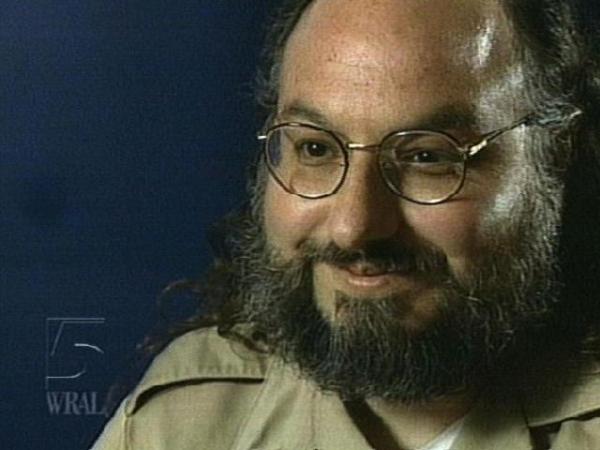
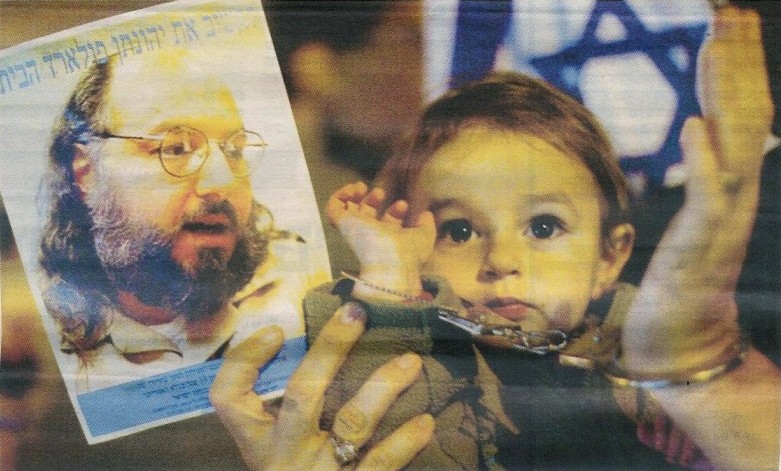
What's next for the campaign to commute the sentence of Jonathan Pollard?
On November 21, 2008, Jonathan Pollard entered the 24th year of his life sentence, with no end in sight. Mr. Pollard's life sentence is disproportionate even when compared to the sentences of those who spied for America's enemies, not withstanding those, like Mr. Pollard, convicted for spying for America's allies.
Pres. George Bush's having declined to commute Jonathan Pollard's sentence, must Mr. Pollard suffer a minimum of 4 more years dreaming of clemency from a potentially out-bound President Obama?
Eric Sherby, vice-chair of the Middle-East Law Committee of the American Bar Association, writes a Jerusalem Post OpEd, "The Pollard Case after Bush":
Many individuals believing that presidential clemency should be granted for Mr. Pollard's more than 23-years of time-served in Federal penitentiary have petitioned the White House with letters and phone calls.
Pres. George Bush's having declined to commute Jonathan Pollard's sentence, must Mr. Pollard suffer a minimum of 4 more years dreaming of clemency from a potentially out-bound President Obama?
Eric Sherby, vice-chair of the Middle-East Law Committee of the American Bar Association, writes a Jerusalem Post OpEd, "The Pollard Case after Bush":
Despite thousands (perhaps tens of thousands) of phone calls, e-mails and letters to the White House from Pollard sympathizers, the Bush Administration never even hinted that it might be softening its no-pardon/no-commutation stance as to Pollard.(Click Read More below for full article.)
Now what?
The beginning of a presidency is never "pardon season," and that fact would appear to mean that Jonathan Pollard will be in prison until 2012 at least.
Yet there is one ray of hope. The new American vice president, Joe Biden, had, until early 2008, been a presidential candidate. In Biden's presidential candidate days, while he was trying to court the Jewish vote, he was asked about Jonathan Pollard. Biden responded that Pollard should be given "leniency." What precisely did Biden mean by "leniency" in the case of Jonathan Pollard - who has already been in prison for more than two decades? Apparently he was not asked to elaborate.
Now that the Bush presidency has ended, it is time for the new vice president to explain what he meant by leniency.
How, and by whom, should that question be posed to Vice President Biden? By President Shimon Peres.
Many individuals believing that presidential clemency should be granted for Mr. Pollard's more than 23-years of time-served in Federal penitentiary have petitioned the White House with letters and phone calls.
Rabbi Pesach Lerner, Vice President of the American organization, National Council of Young Israel, gives a compelling video overview of the situation at hand. (Courtesy Maximum Impact Media)

The information that Jonathan provided to Israel included Iranian, Iraqi, Libyan and Syrian nuclear, chemical, and biological warfare capabilities - all being developed for use against Israel. He also provided information on ballistic missile development by these countries and information on up-coming terrorist attacks planned against Israeli civilian targets.To sign the Free Pollard Now petition please click this link.
Israel was legally entitled to this vital security information according to a 1983 Memorandum of Understanding signed by both countries. But the information was deliberately being withheld from Israel as the result of an illegal intelligence embargo implemented by former Secretary of Defense Caspar Weinberger and former Deputy Director of the CIA Admiral Bobby Ray Inman, whose pro-Arab tilt did not jibe with declared US foreign policy.
Instead, successive Governments of Israel have routinely exploited Jonathan's name and his plight, using it as a sweetener to sell unpopular unilateral concessions to the Israeli public. But when crunch time comes, Jonathan is always dropped from every deal and painful unilateral concessions to the enemy are made regardless. (Some examples include the Hebron Accords, the Wye Accords, and most recently the Disengagement from Gaza and northern Samaria).
In Washington it is an open secret that Jonathan's sentence is grossly disproportionate and purely political. This was confirmed in a 2002 interview with former Secretary of Defense, the late Caspar Weinberger. Weinberger openly admitted that Jonathan's case was a "minor matter" that had been exaggerated out of all proportion to serve another political agenda. The opening that this admission created to secure Jonathan's release was totally ignored.
Similarly Dennis Ross, the former US Special Envoy to the Middle East, stated in his book "The Missing Peace" (published in 2004) that Jonathan deserves to be freed unconditionally. Nevertheless, writes Ross, Pollard is far too valuable as a bargaining chip against Israel, so he advised the president at Wye not to release him. Still no response from Israel.
In point of fact, Israel has already "paid" for Jonathan's release several times over (including freeing 750 murderers and terrorists with blood on their hands as part of the Wye Accords), but has never bothered to collect its due.
In the 22 years that Jonathan has been in prison, he has repeatedly been subjected to cruel and unusual punishment and severe affliction. The Government of Israel has been informed of each and every episode of mistreatment of its agent but has never once intervened on his behalf, nor has the (Israeli) Government ever protested.
20081101
N.Y. Post, denied access by Obama, can only speculate about "changes" in "Obama 2012: His Triumphs Abroad"
by Ralph Peters, New York Post, November 1, 2008
Looking back on the four years of his first administration, President Obama can be proud: He made the US welcome among the family of nations again; he reduced our reliance on military force; and he gave us peace by reaching sensible accommodations with our enemies.
The lies told about him in the 2008 election were exposed as sheer bigotry. Far from being "soft on radical Islam," President Obama was the first world leader to welcome Jewish refugees after Iran's nuclear destruction of Israel's major cities (his only caveat - a fair one - was the refusal to accept Zionist military officers and their families, in light of Israel's excessive retaliation).
He also demonstrated his resolve in the face of extremism when he overruled the obstructionist advice of the Joint Chiefs of Staff and ordered our military to cross the border into Pakistan in force. The subsequent debacle, as Pakistan cut off supply routes to Afghanistan and threatened a nuclear response, was entirely the fault of our generals on the ground, not of the administration.
Fortunately, President Obama's willingness to talk to our enemies rescued the situation. After laying down their arms, our troops were allowed to evacuate Pakistan and Afghanistan in peace. The Taliban's return to power in Kabul did not result in an excessive bloodbath, and al Qaeda is not permitted the unrestricted freedom it enjoyed in the country prior to 2001.
State Department surveys prove that the Afghan population welcomes Sharia law, the closure of girls' schools and other such cultural choices. Our reparations payments to Kabul (as with those to Havana) are only just. Opium production is, arguably, no worse than in the past.
We also have seen peace in Iraq. Claims that our troop withdrawal was responsible for the resurgence of al Qaeda and the subsequent civil war are nothing but Republican campaign propaganda. With the International Sunni Alliance in firm control of Iraq - after Israel's wanton destruction of Iran - order prevails in the streets. As for the Turkish and Arab suppression of the Kurds, our diplomats regard it as a small price to pay for regional stability. Biased reports of massacres and concentration camps remain unsubstantiated.
Our relations with the Muslim world have rarely, if ever, been better. The current $320 per barrel price of oil allows long-oppressed states to develop themselves without the yoke of neo-colonialism or invasive efforts to force democracy upon their populations. As UN Ambassador Ayers noted, "We can state with pride that the US not only respects, but embraces cultural differences."
Relations with Russia are also at a high unthinkable a mere four years ago. Moscow's legitimate concerns for the welfare of its citizens in the "near abroad," as well as for ethnic Russians persecuted by so-called free democracies, fully justified its peace-preservation military deployments into Ukraine and other regional states. The subsequent referendums on re-unification with Russia, while displaying a few inevitable irregularities, have been judged free and fair by the Jimmy Carter Memorial Foundation.
While the deployment of Russian forces into the NATO-member Baltic states to protect ethnic Russians proved controversial, President Obama's personal intervention kept us - and NATO - out of war. Partisan charges of "Finlandization" distort the generous terms of the neutrality guarantees Moscow provides for the former NATO members.
After the internationally brokered (with President Obama in the lead) demilitarization of eastern Poland, it's clear to all responsible parties that Russia's legitimate claims have been fully satisfied and we may expect peace in our time.
President Obama resisted yet another war trap as China lost patience and finally reclaimed its long-lost province, Taiwan. Furthermore, the reduction of the US military presence in Japan and South Korea has deflated strategic tensions in East Asia to the lowest level in over one hundred years. Again, President Obama gave us peace.
(The resulting peace dividend from our president's 25% cut in the defense budget has allowed our government, in a public/private partnership with the Chicago-based Rezko Foundation, to provide subsidized housing for almost six million new immigrant families from developing countries. No other administration policy has raised the world's esteem for us more profoundly than our "Global Balance" instant-citizenship immigration reforms.)
In our own hemisphere, President Obama has supported the cause of justice, human rights and trade unions, cutting off military aid to Colombia, killing the proposed free-trade agreement with that country, and expressing humane understanding for the long freedom struggle of the FARC and other liberation groups.
Preferring a sensible rapprochement with Venezuela to needless confrontation, our president went to Caracas and negotiated a regional division of labor with democratically-elected President Hugo Chavez. The end of our destructive trade embargo against Cuba, our formal apology for the deprivations we imposed, and our generous reparations payments have inaugurated a new era of friendship with our long-suffering neighbors to the south.
The only complaint Democratic Party cadres fairly may lodge against the Obama administration's foreign policy is that we still have not fully opened our border with Mexico. Resistance among right-wing fanatics in Washington and bigots around the country remains too strong for now.
As for Mexico's presidential contest, President Obama has made it clear that, while he would prefer that a reputed drug-cartel leader not be elected, the US will respect the will of the Mexican people and strive for good relations with any future Mexican government.
One can only ask how much higher our 16.2% unemployment rate - an obvious legacy of the Bush years - might be if President Obama had not restored America's standing in the world and re-negotiated unfair trade treaties imposed on American workers by previous administrations.
As our president remarked just the other day in a re-election campaign speech in Dearborn, Michigan: "Wealth redistribution isn't just an American issue - it's a global issue. Better that Americans should be a little poorer, if that means our brothers in Egypt and Bolivia can become a little richer."
Under President Obama, America's back!
Ralph Peters' most recent book is, "Barack Obama: Too Great To Be A Mere Messiah?" (Fairness Doctrine Press, Limited, Chicago, July 2012)
The lies told about him in the 2008 election were exposed as sheer bigotry. Far from being "soft on radical Islam," President Obama was the first world leader to welcome Jewish refugees after Iran's nuclear destruction of Israel's major cities (his only caveat - a fair one - was the refusal to accept Zionist military officers and their families, in light of Israel's excessive retaliation).
He also demonstrated his resolve in the face of extremism when he overruled the obstructionist advice of the Joint Chiefs of Staff and ordered our military to cross the border into Pakistan in force. The subsequent debacle, as Pakistan cut off supply routes to Afghanistan and threatened a nuclear response, was entirely the fault of our generals on the ground, not of the administration.
Fortunately, President Obama's willingness to talk to our enemies rescued the situation. After laying down their arms, our troops were allowed to evacuate Pakistan and Afghanistan in peace. The Taliban's return to power in Kabul did not result in an excessive bloodbath, and al Qaeda is not permitted the unrestricted freedom it enjoyed in the country prior to 2001.
State Department surveys prove that the Afghan population welcomes Sharia law, the closure of girls' schools and other such cultural choices. Our reparations payments to Kabul (as with those to Havana) are only just. Opium production is, arguably, no worse than in the past.
We also have seen peace in Iraq. Claims that our troop withdrawal was responsible for the resurgence of al Qaeda and the subsequent civil war are nothing but Republican campaign propaganda. With the International Sunni Alliance in firm control of Iraq - after Israel's wanton destruction of Iran - order prevails in the streets. As for the Turkish and Arab suppression of the Kurds, our diplomats regard it as a small price to pay for regional stability. Biased reports of massacres and concentration camps remain unsubstantiated.
Our relations with the Muslim world have rarely, if ever, been better. The current $320 per barrel price of oil allows long-oppressed states to develop themselves without the yoke of neo-colonialism or invasive efforts to force democracy upon their populations. As UN Ambassador Ayers noted, "We can state with pride that the US not only respects, but embraces cultural differences."
Relations with Russia are also at a high unthinkable a mere four years ago. Moscow's legitimate concerns for the welfare of its citizens in the "near abroad," as well as for ethnic Russians persecuted by so-called free democracies, fully justified its peace-preservation military deployments into Ukraine and other regional states. The subsequent referendums on re-unification with Russia, while displaying a few inevitable irregularities, have been judged free and fair by the Jimmy Carter Memorial Foundation.
While the deployment of Russian forces into the NATO-member Baltic states to protect ethnic Russians proved controversial, President Obama's personal intervention kept us - and NATO - out of war. Partisan charges of "Finlandization" distort the generous terms of the neutrality guarantees Moscow provides for the former NATO members.
After the internationally brokered (with President Obama in the lead) demilitarization of eastern Poland, it's clear to all responsible parties that Russia's legitimate claims have been fully satisfied and we may expect peace in our time.
President Obama resisted yet another war trap as China lost patience and finally reclaimed its long-lost province, Taiwan. Furthermore, the reduction of the US military presence in Japan and South Korea has deflated strategic tensions in East Asia to the lowest level in over one hundred years. Again, President Obama gave us peace.
(The resulting peace dividend from our president's 25% cut in the defense budget has allowed our government, in a public/private partnership with the Chicago-based Rezko Foundation, to provide subsidized housing for almost six million new immigrant families from developing countries. No other administration policy has raised the world's esteem for us more profoundly than our "Global Balance" instant-citizenship immigration reforms.)
In our own hemisphere, President Obama has supported the cause of justice, human rights and trade unions, cutting off military aid to Colombia, killing the proposed free-trade agreement with that country, and expressing humane understanding for the long freedom struggle of the FARC and other liberation groups.
Preferring a sensible rapprochement with Venezuela to needless confrontation, our president went to Caracas and negotiated a regional division of labor with democratically-elected President Hugo Chavez. The end of our destructive trade embargo against Cuba, our formal apology for the deprivations we imposed, and our generous reparations payments have inaugurated a new era of friendship with our long-suffering neighbors to the south.
The only complaint Democratic Party cadres fairly may lodge against the Obama administration's foreign policy is that we still have not fully opened our border with Mexico. Resistance among right-wing fanatics in Washington and bigots around the country remains too strong for now.
As for Mexico's presidential contest, President Obama has made it clear that, while he would prefer that a reputed drug-cartel leader not be elected, the US will respect the will of the Mexican people and strive for good relations with any future Mexican government.
One can only ask how much higher our 16.2% unemployment rate - an obvious legacy of the Bush years - might be if President Obama had not restored America's standing in the world and re-negotiated unfair trade treaties imposed on American workers by previous administrations.
As our president remarked just the other day in a re-election campaign speech in Dearborn, Michigan: "Wealth redistribution isn't just an American issue - it's a global issue. Better that Americans should be a little poorer, if that means our brothers in Egypt and Bolivia can become a little richer."
Under President Obama, America's back!
Ralph Peters' most recent book is, "Barack Obama: Too Great To Be A Mere Messiah?" (Fairness Doctrine Press, Limited, Chicago, July 2012)
20081030
Candidates evaluated on keeping America safe - political jihad expert, Walid Phares
Dr. Walid Phares (an academic, author and analyst at the Foundation for the Defense of Democracies) prioritizes the choice American voters face in this treatise published in American Thinker, "Vote for National Survival:
Evaluating the Candidates on Freedoms, and Educating the Public:
For the first time since the end of the Cold War, there seems to be a concern about a scrupulous respect for freedom of the press and of expression in some "ideological" quarters of a potential Obama Administration. Although I do believe that the Senator from Illinois has kept a strong record on the necessity of a balanced debate regarding the nation's fundamental issues, and although Senator Biden has been a proponent of free speech, there are signs that radical groups could use Government positions to harass media that would be critical of an Obama Administration on national security grounds.
Under a McCain Administration there are no guarantees that the "Jihad-o-phile lobby" will recede, but chances are much higher for new counterterrorism education to make a breakthrough than under an Obama Administration.
Under the latter, Muslim reformers in America won't have an equal chance with the Jihadi pressure groups to have their message received by their communities. Middle East dissidents will have their stories marginalized in the public sector so that it won't perturb the deals to "be cut with the regimes in the region." All that is predictable and projectable, hence the options are really limited if not set in terms of choice.
The Choice:
On the one hand, Senator Obama has a character to be admired and has skills to make other politicians jealous. He would make America look very good. Had we not been in a confrontation with the Jihadist forces worldwide, I would have gladly voted for him. Strange as it may be for many of my colleagues, his alleged "socialism" doesn't intimidate me, nor does his "radical liberalism." America's society will only absorb what it can digest.
On the other hand, Senator McCain is a national hero and a product of real American traditions. I would have liked for him to have been elected in 2000 so that he would have been the Commander in Chief on September 11 (with all respect due to President Bush). There are other men and women who are also qualified to lead this nation in these politically and economically trying times such as Senator Clinton, Governor Romney and others. But our political process has selected McCain and Obama and one of them has to become the President.
"Primo vivere" says the Roman adage. You've got to survive first and you've got to be free too. I have learned this the hard way. Hence in this 2008 Presidential election, I will vote on national security, that is national survival. All other issues are linked to our ability as a nation to make it through these very critical years.
After having reviewed the two platforms from that perspective, and short of discovering what can change my analysis in the next few days, I wish Senator Obama good luck and, as a registered independent, I will vote for Senator McCain for the President of the United States.
20081027
Lewis Black discusses the media's election coverage with Anderson Cooper at Time Warner's Politics 2008
Lewis Black speaks to Anderson Cooper before a live, media-industry symposium audience at TW/Digital Hollywood's "Politics 2008" conference in NYC, October 15, 2008
20081008
The paramount criterion for selecting your next president
Since the time of Hitler, civilization has never been so close to the brink of total catastrophe. This American election will decide whether civilization as we know it will survive. As much as economic questions are currently front and center, with blame to go all round, this is not an election primarily about corporate greed, or individuals living beyond their means, or government neglect of economic oversight. Nor is it about whether we should have gone into Iraq where, like it or not, American boots on the ground have begun to create an emerging democracy. This election is about whether there will be a nuclear holocaust.Read the article in National Review.
When you cast your ballot this election, make no mistake: you are voting for or against a nuclear holocaust. Not because Barack Obama wants such a horror, but because he will not prevent it. He will still be talking when the point of no return in Iran’s nuclear program is reached. And the balance of power in the world will — with terrible consequences — have changed forever. (Pictured, Iran Pres. Ahmadinejad inspects nuclear energy plant with Military Chiefs).
Subscribe to:
Posts (Atom)